Professional Heat Treating
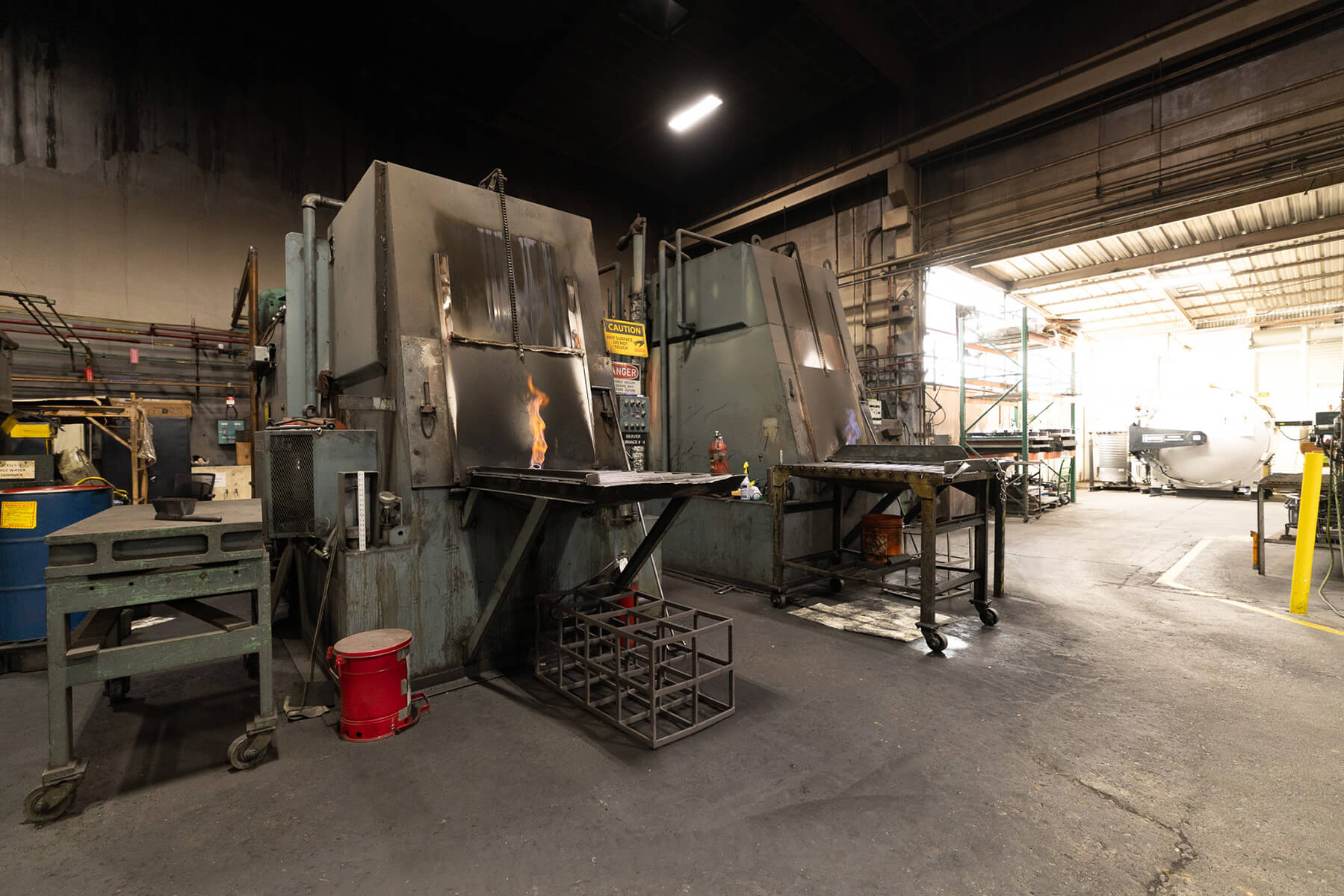
ThermoFusion provides professional hardening and tempering services for aerospace, engineering, and industrial applications throughout the Bay Area. Hardening is a through-hardening process that strengthens metal components from surface to core without changing the carbon content at the surface. The process typically takes place in an endothermic or vacuum atmosphere.
Components are heated above their austenitizing temperature, allowing the material structure to transform before being rapidly quenched and tempered to achieve the required hardness, toughness, and performance characteristics.
ThermoFusion also provides professional annealing and stress relief services for aerospace, engineering, and industrial applications throughout the Bay Area. These heat treatment processes are used to improve material properties, reduce internal stresses, and enhance machinability while maintaining dimensional stability.
Stress relieving is commonly used to reduce internal stresses caused by manufacturing operations such as cutting, forming, machining, rolling, straightening, welding, or casting. Proactively reducing these stresses helps minimize the risk of distortion, cracking, and dimensional movement during final machining or long-term service.
How Heat Treating Works
During hardening, metal components are heated in an enclosed furnace until the proper structural transformation occurs. For steels, this transformation changes the crystal structure from ferrite to austenite. Aluminum, titanium, and high-nickel alloys may respond differently, but the same general principle applies: controlled high-temperature processing followed by quenching.
After heating, components are rapidly quenched, commonly in oil, to produce the desired hardened structure. The parts are then tempered to reduce brittleness and bring hardness down to the specified level while improving toughness and dimensional stability.
Annealing involves heating a material to a specified temperature and allowing it to cool under controlled conditions. This process softens the material, improves ductility, refines grain structure, and enhances machinability. Stress relieving uses controlled heating below the material’s annealing or transformation temperature, followed by controlled cooling.
The process is especially useful for parts with tight dimensional tolerances, extensive machining requirements, large or complex geometries, or residual stresses from prior manufacturing steps.
ThermoFusion Heat Treating Capabilities
ThermoFusion performs hardening and tempering in endothermic and vacuum furnace environments. Our facility supports controlled heating, oil quench, and air temper operations for a range of production and prototype requirements.
ThermoFusion also performs annealing and stress relieving in air, endothermic, and vacuum furnace environments. Our facility supports controlled thermal processing for a wide range of materials, component sizes, and production requirements.
- Through-hardening services
- Endothermic furnace processing
- Vacuum atmosphere processing
- Oil quench operations
- Air temper operations
- Processing temperatures commonly ranging from 1500°F to 1600°F
- Annealing services
- Stress relieving services
- Air furnace processing
- Vacuum furnace processing
- Processing temperatures commonly ranging from 600°F to 1,400°F
- Production and prototype quantities
- Quality documentation available
Common Materials
- Steel
- Beryllium Copper
- Aluminum
- Titanium alloys
- High-nickel alloys
- Titanium
- Carbon steels
- Nickel steels
- High-alloy steels
- Copper alloys
- Plastics, depending on application requirements
Benefits of Heat Treating
- Improved hardness and strength
- Enhanced toughness and durability
- Improved wear resistance
- Reduced brittleness after hardening
- More consistent mechanical performance
- Strength improvement from surface to core
- Extended component service life
- Suitable for demanding aerospace, industrial, and engineering applications
- Reduced residual stress
- Improved dimensional stability
- Reduced risk of distortion during final machining
- Reduced risk of cracking or stress-related damage
- Improved machinability
- Improved ductility and formability
- Enhanced material consistency
- Cost-effective way to improve part reliability before final machining
Industries Served
Our hardening and tempering services support aerospace, defense, automotive, industrial manufacturing, tooling, heavy equipment, construction, and precision engineering applications requiring reliable metallurgical performance and process control.
Our annealing and stress relief services support aerospace, defense, industrial manufacturing, tooling, heavy equipment, construction, energy, and precision engineering applications requiring reliable thermal processing and process control.
Certified Quality
With decades of thermal processing experience, ThermoFusion is committed to delivering consistent results that meet stringent customer and industry requirements. Our facility maintains ISO 9001:2015, AS9100D, and Nadcap certifications, ensuring quality, traceability, and process control throughout every project.
Ready to Get Started?
Send us your material specifications, hardness requirements, and production schedule. Our team will recommend the right thermal processing solution for your application.
